

TLDR: Body positivity often feels inaccessible to people really struggling with their body image, in a world where we are constantly told our bodies are too much or not enough. Body neutrality aims to help you view your body in more neutral terms and can be a great middle ground between shaming your body and trying to reach for positivity that rings hollow. Practicing body neutrality can help you feel better in the body you have right now, no matter what challenges you are facing in your relationship with your body.
What is body neutrality?
Body neutrality is a neutral relationship with your body, rather than a negative one or trying to have a positive one. It is viewing your body through a neutral lens, using neutral, non-judgmental language rather than using a negative lens with critical, shaming language, or trying to have a positive view of your body with positive language only. As a Health at Every Size body image therapist, this is one of my favorite tools personally and professionally.
How is body neutrality helpful?
Having a neutral relationship with your body is obviously better than having a negative one. Your brain can’t focus on two thoughts at once, so if you focus on a more neutral thought about your body, your brain naturally moves away from the critical, shaming thoughts. This reduces negative feelings about your body and can lower shame, disgust, anxiety, or depression about your body. It can also help you be more compassionate toward your body - after all, it’s the only one you have and has gotten you this far.
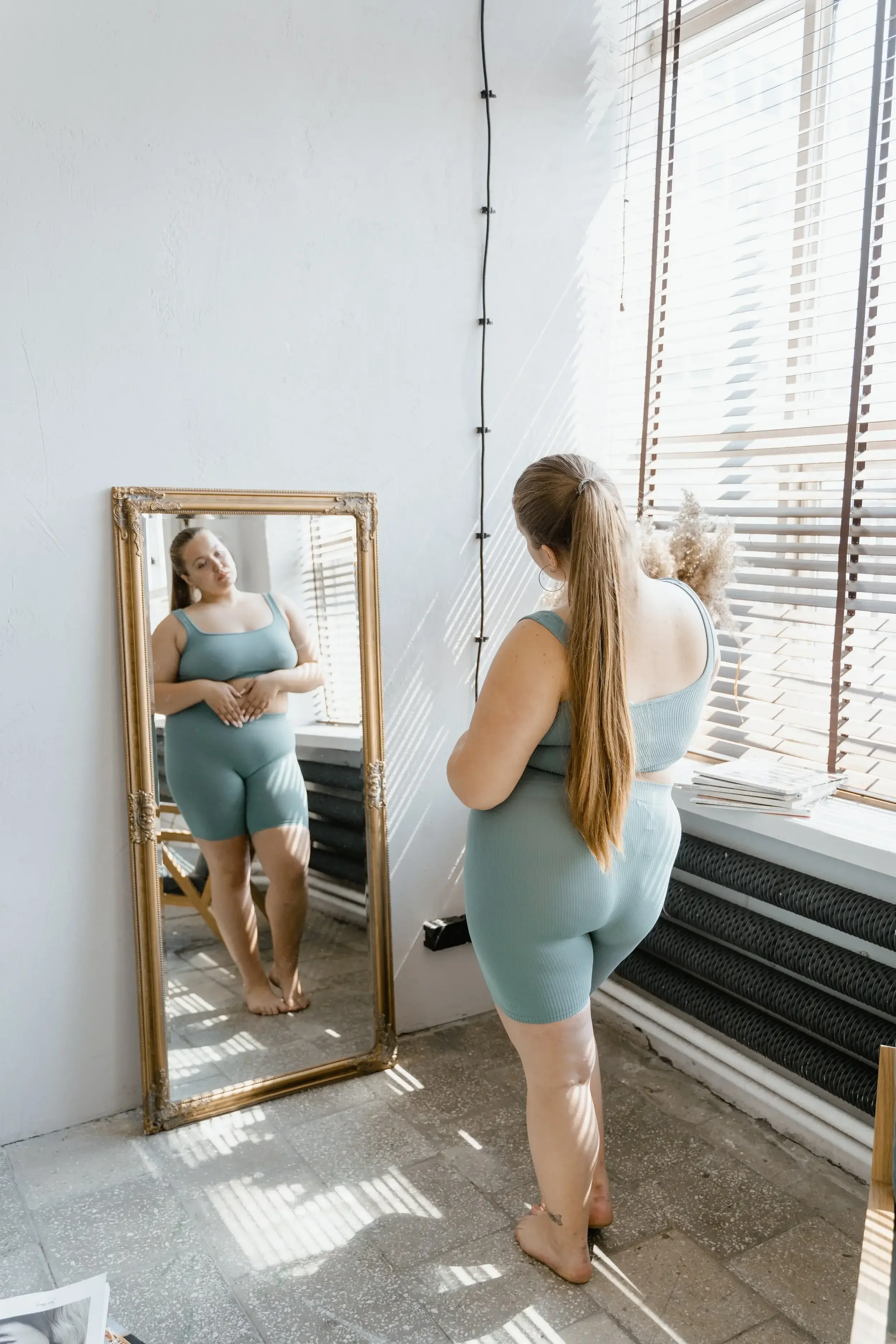
Why is body neutrality better than body positivity?
It’s not that body positivity is bad - if someone feels great about their body and loves it, I’m all for that.
It’s that for many people it’s not realistic.
Body positivity can feel inaccessible to people who either have felt negative about their body for a very long time. If you’ve hated your body for years, you’re not going to feel great about it overnight. It’s not a switch you can just flip (wouldn’t that be nice?).
Not to mention, it is an uphill battle to feel great in your body when you are constantly receiving messages from every direction, all the time, about how your body is wrong, too much, not enough, etc..
If you are in the space of really struggling in your relationship with your body, trying to force positive thoughts in a world that’s telling you your body is bad can feel invalidating and like gaslighting. Women need LESS gaslighting and invalidation - not more! Body neutrality helps you shift away from shame and toward a better relationship with your body without feeling like a bridge too far.
Lastly, body neutrality can be useful when people are struggling with their bodies in ways unrelated to body image - for example, injury, illness, infertility, pregnancy difficulties, after miscarriage, trauma, etc.. Basically anytime it’s hard to be in your body, which is important, because times like this are part of the human experience.
How do I practice body neutrality?

Start by noticing your self-talk when you are feeling badly about your body. This could include either actual out loud comments OR your internal monologue. Notice what emotions come with this self-talk: shame, disgust, anxiety, vulnerability, anger, etc..
Then, as soon as you can catch the negative thoughts, rephrase them to neutral, accurate, and non-judgmental language. Do not use something that doesn’t feel true to you. Using a soothing gesture like a hand on your heart can help, as can taking a few slow breaths.
For example:
This is my body.
This is my stomach (or whatever body part you are having the thought about).
Sometimes it’s hard to have a body.
My body has gotten me this far.
I’m having a hard time feeling good in my body today.
My body is having a rough time right now.
My belly houses my organs, digests my food, and makes a soft place to cuddle (modify as needed for whatever body part you’re feeling concerned with).
Bodies have fat/wrinkles/pimples/grays/etc.
Bodies change.
Companies are counting on women feeling this way to make money.
Our culture’s beauty standard excludes 99% of women.
Notice how these statements make you feel. At first, they probably feel awkward and unfamiliar, but they also are probably somewhat validating and at a minimum, less shame inducing, anxiety provoking, etc.. This is an improvement.
At first, you may not realize what your self-talk was until way after the fact. That’s ok. And you may struggle to rephrase your thoughts. That’s ok too. With practice, you will get better and better at it and eventually be able to do it in real time, without much effort.

What if I get stuck?
You will get stuck. You will have bad body image days as long as our culture continues to be committed to antifat, ableist, racist, etc. narrow beauty standards. This is just the reality. However, the more you practice tools to help you have a good relationship with your body, the less of these days you’ll have, the more quickly you’ll be able to rebound from them, and the more you will start to feel that the problem isn’t your body, it’s the way we’ve been taught to think about bodies. Progress isn’t linear. If you get stuck, keep practicing. Working with a weight-inclusive, trauma informed therapist can really help as well.
Start Therapy For Support With Parenting and Body Image in Los Angeles:
If you struggle in your relationship with your body, whether due to body shame, trauma, fertility or health challenges, you deserve support and compassion, including from yourself. While practicing body neutrality is a great start, therapy can help you unlearn the way you’ve been taught to feel about your body and build a kind, respectful, non-adversarial relationship with it, no matter what you’ve been through. Start by following these steps:
Reach out for a consultation at Well Woman Psychology.
Meet with a therapist specializing in body image.
Start to feel at peace with your body, rather than at war with it.
About the Author:
Dr. Linda Baggett is the licensed psychologist behind Well Woman Psychology, a weight-inclusive, Health at Every Size, trauma-informed therapy practice focused on serving women in California,Colorado, Illinois, New York, and Washington. Dr. Baggett helps women repair their relationships with their bodies no matter what they have been through. Besides body image, she also helps clients with trauma, relationship issues,pregnancy loss and miscarriage, infertility,perimenopause and menopause,perinatal andpostpartum struggles, all of which can impact our relationship with our bodies.
Disclaimer: This blog is for educational and informational purposes only, is not a substitute for individual medical or mental health advice, and does not constitute a client-therapist relationship.