

How To Help Clients of All Body Sizes With Body Image Issues
TLDR: All therapists have unrecognized weight bias that harms clients because it is the air we all breathe. But this unintentionally hurts clients without realizing it. It is essential for therapists to work to unlearn antifat bias, and instead, learn affirming, effective strategies to help clients of all sizes with body image issues. I created a free, evidence based guide to help therapists do exactly this.
The helping professions have a weight bias problem, whether or not we like to admit it.
The truth is, clients leave therapy because they experience anti-fat bias from their therapists. Therapist behavior can increase body shame, trigger disordered eating, be stigmatizing and harm the relationship, and cause many more types of harm. Some of them seek out weight inclusive therapists they feel safer with, and others don’t go back to therapy at all. Either way, clients are unintentionally harmed and as we know from social justice and trauma informed care, impact matters more than intent.

If you’re a therapist, you know the profound impact shame can have on a person’s sense of self, relationships, and healing journey. Yet one of the most overlooked and deeply ingrained sources of shame is weight-based stigma.
Good therapists cause harm around weight, often unintentionally and without awareness. Often, we just don’t know what we don’t know. And it’s not an individual therapist’s fault that there is ZERO training on this in graduate school.
I have had MANY clients come to me who had other therapists they were otherwise satisfied with, except for the feelings of weight stigma they experienced. Think about that - they left therapists they were otherwise happy with because they didn’t feel safe to discuss body concerns because of the therapist's unrecognized anti-fat bias. The therapist is probably wondering why the client stopped seeing them.

I hear things like:
“I just didn’t feel comfortable/safe to discuss body stuff with her.”
“I brought it up once, but they started doing goal setting with me around how to move more and eat less.”
“They praised me for restriction and encouraged dieting to improve how I feel about myself without ever assessing me for an eating disorder.”
“The therapist seemed very uncomfortable talking about weight with a person in a larger body.”
“The therapist said, I know exactly how you feel, I used to think I was fat, which just told me that she used to fear looking like me and thinks that’s the same experience.”
“The therapist said not to say fat, that it wasn’t a nice thing to say about myself, which told me exactly what she thinks about fatness.”
And I’m certain that all of these therapists would say that they do not have weight bias. And I believe that most of them genuinely believe this.
But when weight bias is the air we are all breathing, we ALL have weight bias that we have to unlearn and when weight bias is everywhere, in the air, all around us, it makes it very difficult to recognize when we have it.
This issue doesn’t just affect those in bigger bodies - people of ALL sizes are harmed by anti-fat beliefs.
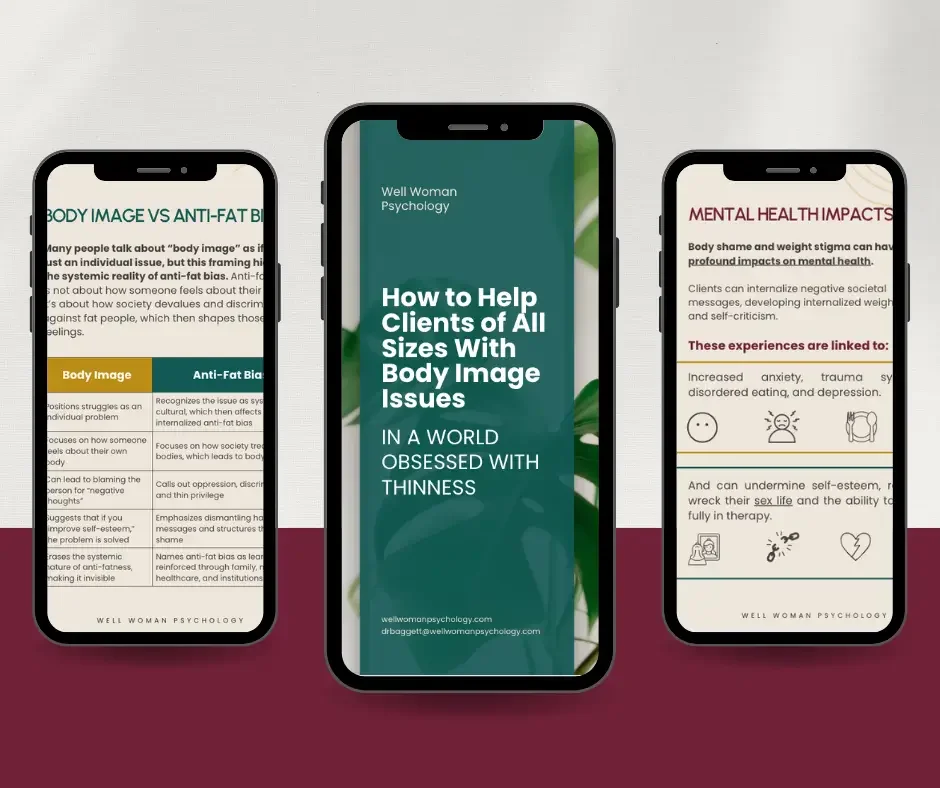
To counteract this and to empower therapists with the right tools, I created a free, evidence informed guide for clinicians.
It includes guidance around affirming, accurate language around bodies and weight, discusses how weight stigma sneaks into therapy, educates about common ways therapists unintentionally harm clients with their unrecognized weight stigma, and offers practice, weight-inclusive strategies to support clients in all bodies.
So, if you know of a health care professional who could use this guidance, please feel free to share it with them!
And if you are a healthcare professional, especially if you are a therapist or in a therapy-adjacent field, I hope that you bravely take the leap to examine your own weight bias (we all have it!) and start to work to unlearn it and learn how to better show up for clients around these issues.
How Do I Unlearn Weight Bias and Start Supporting My Clients of All Sizes With Body Image Issues:
If you struggle to know how to support your clients with body image issues, notice discomfort when discussing the topic with clients, or have not been trained in size-inclusive therapy approaches, it is important to seek support to learn affirming ways to help without unintentionally harming. Start by following these steps:
Check out my Favorite Resources to Improve Body Image and Fight Weight Stigma
Reach out if you’d like further consultation. I love helping providers with this work!
Free Resource
How to Help Clients of All Sizes With Body Image Issues in a World Obsessed With Thinness
For therapists working with clients who have bigger bodies and/or body image struggles.
Weight stigma can quietly harm clients and the therapeutic relationship. This free guide helps clinicians spot anti-fat bias, distinguish body shame from bias, and use weight-inclusive strategies to support all clients.
Start Therapy to Learn How to Improve Body Image in Los Angeles:
If you are struggling to feel at peace with your body, stick to an exercise routine without shame, hate the way you look, or feel like your weight is holding you back, you are not alone. Your body is not the problem - how we are taught to think and feel about bodies is. The good news is, this can be unlearned and you can learn to have a more peaceful relationship with your body, no matter your current or future weight. Start by following these steps:
Reach out for aconsultation at Well Woman Psychology.
Meet with atherapist specializing in body image and acceptance and women from a Health at Every Size, weight-inclusive lens.
Learn to overcome learned body shame and treat your body with kindness.
About the Author:
Dr. Linda Baggett is the owner and psychologist at Well Woman Psychology, a weight-inclusive, Health at Every Size, and fat positive private therapy practice focused on serving women in California,Colorado, Illinois, New York, and Washington. Dr. Baggett has ditched diet culture personally and professionally and now helps clients to let go of body shame, protect themselves from weight stigma, and develop peaceful relationships with their bodies without dieting or criticizing. She also helps clients with trauma, relationship issues,pregnancy loss and miscarriage, infertility,perimenopause and menopause,perinatal andpostpartum struggles.
Disclaimer: This blog is for educational and informational purposes only, is not a substitute for individual medical or mental health advice, and does not constitute a client-therapist relationship.